

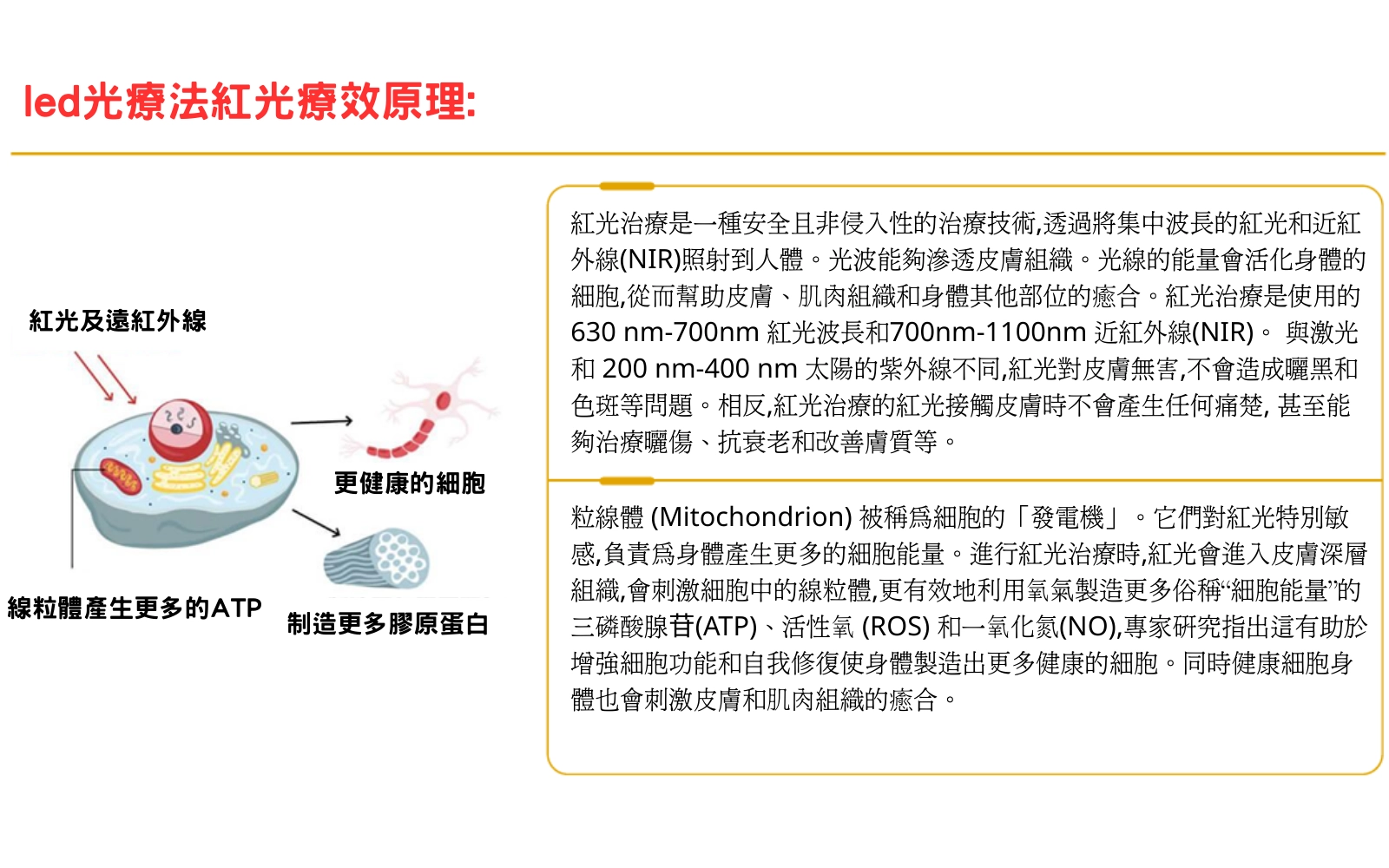
Red light therapy is a safe and non-invasive treatment technique that involves irradiating the body with concentrated wavelengths of red light and near-infrared (NIR) radiation. The light waves can penetrate skin tissue. The energy of the light activates the body's cells , thereby aiding in the healing of the skin, muscle tissue, and other parts of the body. Red light therapy uses 630 nm-700 nm red light wavelengths and 700 nm-1,100 nm near-infrared (NIR) radiation. Unlike lasers and the 200 nm-400 nm ultraviolet rays from the sun , red light is harmless to the skin and does not cause problems such as sunburn or pigmentation. On the contrary , red light therapy does not cause any pain when it comes into contact with the skin and can even treat sunburn, combat aging, and improve skin texture.
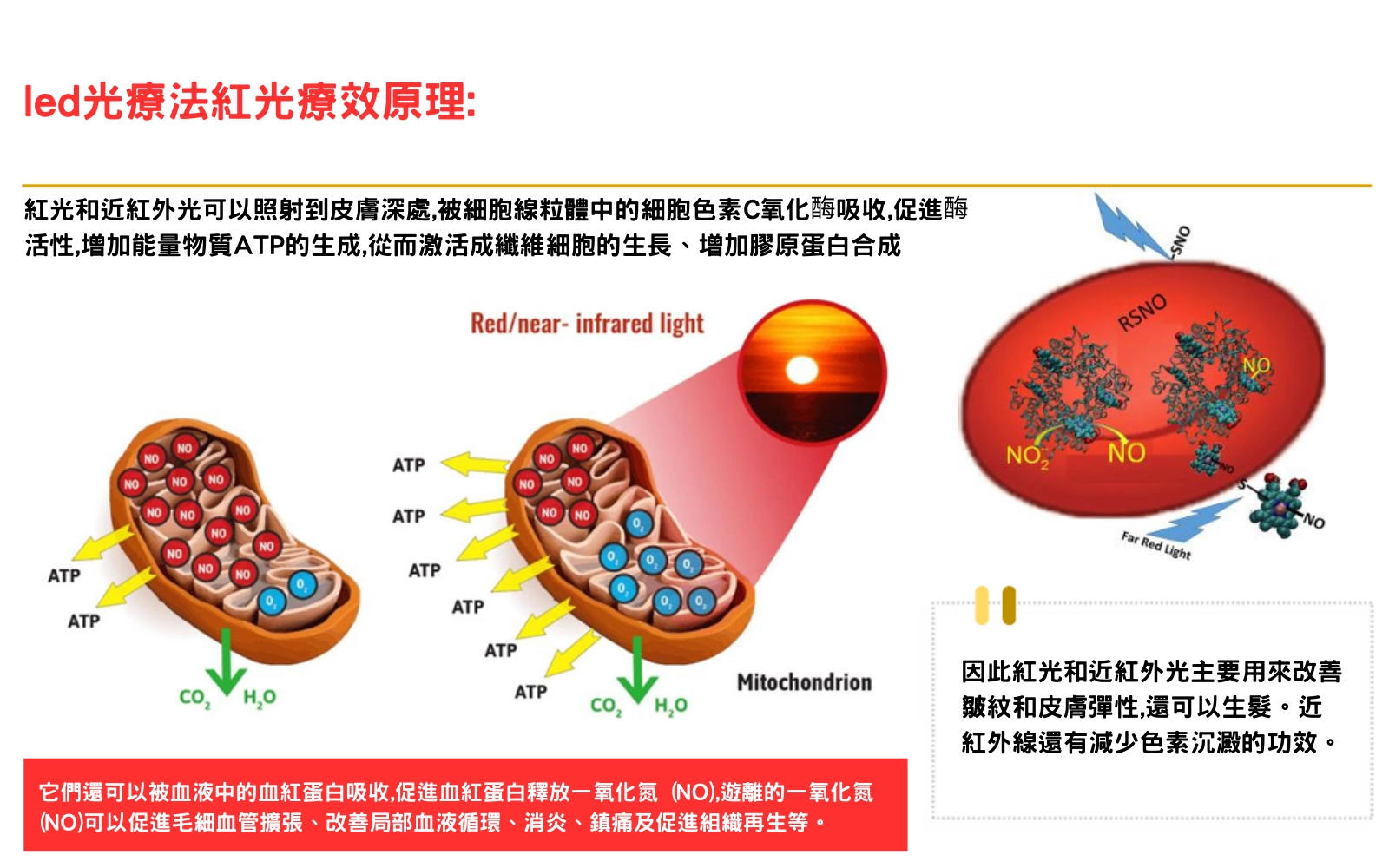
Mitochondrions are known as the "generators" of cells. They are particularly sensitive to red light and are responsible for generating more cellular energy for the body. During red light therapy , the red light penetrates deep into the skin tissue , stimulating mitochondria in cells to more efficiently utilize oxygen to produce more adenosine triphosphate (ATP) , commonly known as "cellular energy," as well as reactive oxygen species (ROS) and nitric oxide (NO). Experts indicate that this helps enhance cell function and self-repair, enabling the body to produce more healthy cells. Simultaneously, healthy cells also stimulate the healing of skin and muscle tissue.
Since pain is usually caused by inflammation , it will subside as the wound heals ( red light therapy can accelerate healing ) . However , if the pain is caused by chronic inflammation , red light therapy can reduce inflammation and improve bodily functions ( healing speed ) .
Red light therapy can be applied to :
Back pain
low back pain
arthritis
Knee osteoarthritis
Acute and chronic neck pain
Frozen shoulder / tennis elbow ( lateral epicondylitis )
Promotes the repair and healing of inflamed and ulcerated wounds, and helps with recurrent cold sores ( herpes labialis ).
Rheumatoid arthritis
Osteoarthritis
Allergic dermatitis
Chronic periodontitis
Metabolic arthritis ( gout )
infection after dental implant surgery
Osteoarthritis
Otitis media / ear pain, tinnitus
Chronic tendinitis
Different studies have indicated that red light therapy can effectively treat morning stiffness and pain associated with rheumatoid arthritis, significantly reduce pain in patients with knee osteoarthritis, and help treat chronic myofascial pain in the neck.
In addition , red light therapy has been shown to reduce pain and increase the range of motion of joints affected by osteoarthritis and rheumatoid arthritis : just a few sessions of red light therapy can reduce pain by 50% .
The anti-inflammatory properties of red light therapy stimulate cellular energy and increase collagen production , which helps promote healing , reduce pain , and aid in the recovery from degenerative joint diseases.
# Red light therapy # Red light side effects # Red light efficacy


